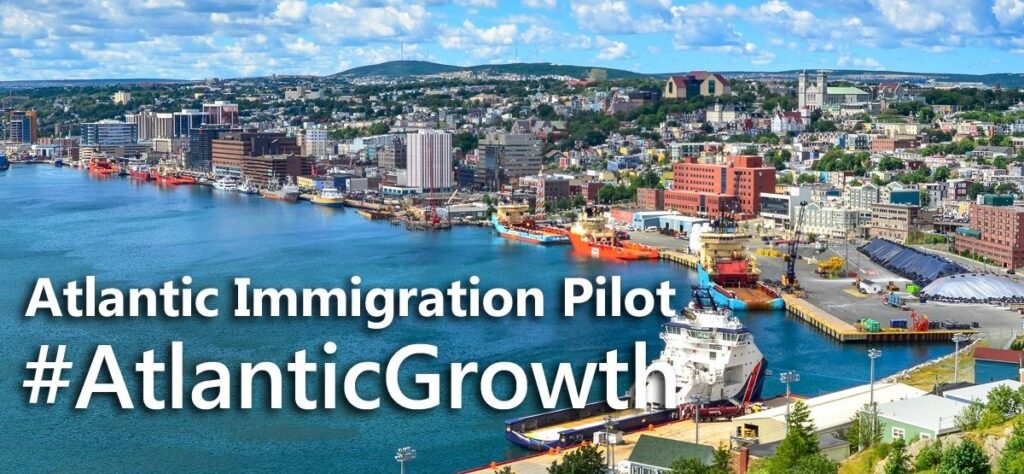
The Atlantic Immigration Pilot (AIP) was a strategic initiative launched in 2017 to address labour market gaps in the Atlantic provinces of Canada: Newfoundland and Labrador, Nova Scotia, Prince Edward Island, and New Brunswick. Designed to attract and retain skilled foreign workers and international graduates, the AIP aimed to support economic growth through population and workforce expansion.
The program was employer-driven, making it unique among Canada’s immigration pathways. Employers in Atlantic Canada could hire international talent for job positions they had been unable to fill locally. The program allowed skilled workers and graduates to gain permanent resident status while contributing meaningfully to the regional economy.
To qualify under the Atlantic Immigration Pilot, applicants had to meet several core requirements, depending on which of the three streams they applied through:
This stream was for international students who graduated from a publicly funded institution in one of the Atlantic provinces.
Eligibility criteria included:
A diploma, degree, or other credential from a publicly funded post-secondary institution in Atlantic Canada
Residence in the province for at least 16 of the last 24 months before graduation
No need for prior work experience
Language proficiency in English or French (CLB/NCLC level 4 or above)
Proof of settlement funds to support yourself and your family
Designed for experienced professionals and managers.
Eligibility requirements:
At least one year of work experience in a management, professional, or technical/skilled job (NOC skill type 0, A or B)
Minimum of Canadian high school education or its equivalent
Language test results (CLB/NCLC level 4 or higher)
Proof of financial ability to support family members
This stream targeted workers in jobs that required high school education and/or job-specific training.
Eligibility criteria included:
At least one year of work experience in a relevant occupation (NOC skill level C)
Canadian high school diploma or equivalent
Language proficiency in English or French (CLB/NCLC level 4 or above)
Financial ability to support you and your family
The Atlantic Immigration Pilot was employer-centric, requiring employers to play an active role in the hiring and settlement process.
Employers were required to:
Be officially designated by the province where the candidate would work
Offer a valid job to a candidate meeting program-specific requirements
Collaborate with the applicant on a settlement plan
Assist the new employee and their family in integrating into the community
Employers could use the pilot to fill roles that they couldn’t source talent for within Canada, helping to address regional labour shortages.
There were two key steps to the application process:
Get a Job Offer & Endorsement
Secure a job offer from a designated employer in one of the Atlantic provinces
Work with a settlement service provider to develop a personalized plan
Obtain a provincial endorsement to proceed with the application
Apply for Permanent Residence
Submit the permanent residence application to Immigration, Refugees and Citizenship Canada (IRCC)
Include all required documents: job offer, endorsement certificate, settlement plan, language results, education assessment, and proof of funds
Undergo medical exams and police background checks
With the closing of the AIPP on December 31, 2021, the Atlantic Immigration Program (AIP) was introduced as a permanent immigration pathway starting in 2022. The core structure remains employer-driven but introduces refinements and long-term strategic alignment to support population growth and economic sustainability in Atlantic Canada.
Our legal professionals can assist you with transitioning to the new program, verifying your eligibility, or filing a valid AIPP application if you still have a valid provincial endorsement.
At International Immigration Law Firm, we have in-depth experience with Atlantic Canada’s immigration programs. Our immigration consultants and lawyers offer:
Guidance in obtaining a valid job offer and connecting with designated employers
Support with your settlement plan and provincial endorsement
End-to-end assistance in submitting a complete PR application
Updates and eligibility checks for the new Atlantic Immigration Program
Whether you are an international graduate, a skilled worker, or an employer in Atlantic Canada, we are here to support your immigration journey.
The Atlantic Immigration Pilot may have officially closed, but pathways to immigrate to New Brunswick, Nova Scotia, Prince Edward Island, or Newfoundland and Labrador are still open under the new Atlantic Immigration Program.
Copyright 2024 Consultvisa, All rights reserved.